SMS Pricing Comparison: The Hidden Cost of Low Delivery Rates

Nov 05, 2026

10,000 messages at $0.01 each = $100. But if 30% of them are blocked by carrier firewalls, your effective cost is actually $142 per 10,000 delivered messages. Now, compare that to 10,000 messages at $0.03 each with a 95% delivery rate: your effective cost is $315. The math seems obvious—until you realize the cheap route cost you 3,000 failed user registrations.

The Cheapest Country to Send an SMS (and Why It Fails)

Comparing $0.002 in India to $0.10 in Switzerland

Global pricing maps show extreme variations. According to Sinch's 2026 pricing index, SMS to India can sit around $0.002, while Switzerland exceeds $0.08. But India enforces strict DND (Do Not Disturb) registries and DLT template approvals. Sending marketing traffic without a registered DLT template gets you blocked instantly by the carrier, rendering that $0.002 rate completely useless for unapproved traffic.

Here is a comparison of how "cheap" routes stack up against enterprise direct routes when factoring in delivery and operational overhead:


Pricing Model Base Rate (Est.) Actual Delivery Rate Effective Cost per Delivered Msg Hidden Business Impact
Grey Route (Aggregator) $0.010 70% - 80% $0.0125 - $0.0142 High customer churn, blocked Sender IDs, zero support.
Direct Route (Enterprise) $0.030 95% - 98% $0.0306 - $0.0315 High conversion, fast Sender ID approval, Webhook analytics.

The math reveals a counter-intuitive truth: the "cheap" route actually costs you more per successful delivery, while simultaneously destroying user trust. When an OTP fails, the user doesn't blame the carrier—they blame your brand.

Why DND Registries and Local Regulations Matter

Cheap providers often ignore local compliance. They route traffic through unauthorized SIM farms or grey routes. When the local carrier detects the breach, your Sender ID is blacklisted. Infobip's 2025 report notes that over 40% of unverified A2P traffic is now flagged by Tier-1 carrier firewalls globally.

 The Math: Low Price x Low Delivery = High Cost

Real-World Example: Failed Registrations

For an iGaming operator, a failed OTP isn't just a failed SMS; it's a lost deposit. If your average user lifetime value (LTV) is $50, a 20% delivery drop on 1,000 new users costs you $10,000 in lost revenue. This is why Twilio emphasizes "Total Cost of Ownership" over per-message rates in its enterprise SLA documents.

Factoring in the Cost of Support Calls

When messages fail, players call support. Support calls cost money—both in telecom fees and agent time. A reliable provider reduces your inbound support volume. A single support ticket costs an average of $4.50 to resolve (per Gartner benchmarks). If 100 failed OTPs trigger support calls, that's an extra $450.

 Finding the Sweet Spot in SMS Pricing Comparison

The Role of Direct Connections

Direct connections cost slightly more than grey routes but guarantee delivery. Laaffic's pricing reflects the true cost of direct carrier interconnects (whitelisted routes), ensuring you aren't paying for dropped messages.

Understanding MessageBird and Klaviyo Pricing Models

While e-commerce platforms like Klaviyo charge a premium for their software integrations, pure-play communication providers like Laaffic focus on routing efficiency. If you don't need the e-commerce bells and whistles, you can secure much better per-message rates by negotiating direct wholesale interconnects.

 Frequently Asked Questions

Q1: How to negotiate enterprise SMS pricing?
Prove your opt-in traffic quality and commit to a monthly volume tier. Carriers offer lower wholesale rates to senders with low complaint ratios.

Q2: Why does my provider suspend my account for sending "cheap" SMS?
If you use grey routing or send without proper consent, carriers will issue penalties (financial fines) and suspend your Sender ID.

Q3: Is it cheaper to use a single global provider or local ones?
A single provider with direct local connections (like Laaffic) is usually cheaper and easier to manage than negotiating with individual carriers in every country, because they aggregate the volume to secure better local wholesale rates.

Data Sources

  1. Sinch: SMS Pricing Guide 2026

  2. Infobip: Global A2P Messaging & Firewall Report 2025

  3. Twilio: SMS Pricing Documentation

Correction Contact: service@laaffic.com or +63 9637902308.
Published: 2026-11-5 | Last Updated: 2026-11-05


Related Posts

Say Goodbye to Delisting Risks! Laaffic PWA Officially Released, Integrating SMS to Create a New Marketing Loop

Laaffic PWA A no-store-listing solution built for iGaming. We integrate no-review PWA distribution with Laaffic’s global SMS network to deliver a native “SMS + PWA” marketing closed loop, helping you bypass platform reviews, removal risks, and high commissions. Core Advantages: ✅ No listing, zero risk: No store submission, avoid takedowns ✅ Zero commission, full revenue: Keep 100% of your earnings ✅ Closed-loop conversion: Track full journey from SMS click to PWA install ✅ Exclusive benefit: Free for existing Laaffic SMS customers

Feb 04, 2026
How to Send 10,000 SMS at a Time | Bulk Blast SMS Guide

This guide explains how bulk blast SMS works, what tools you need, and how to execute high-volume SMS campaigns successfully.

Feb 06, 2026
Laaffic SMS+PWA Debuts at AIBC Eurasia 2026, Decoding the Growth Logic of Affiliate Marketing

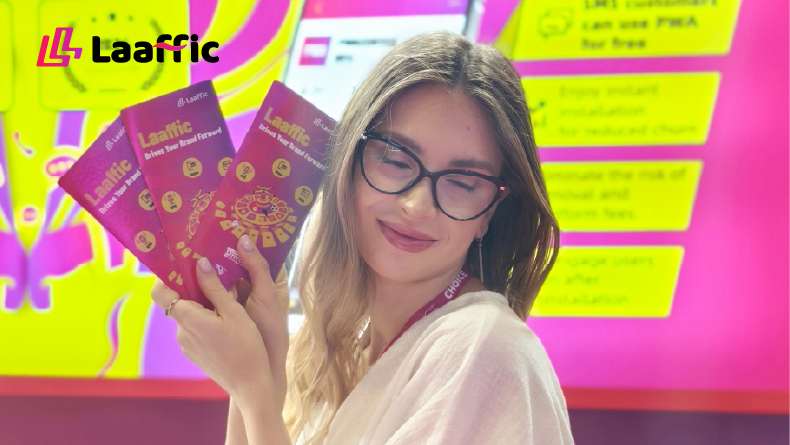
At the AIBC Eurasia 2026 summit in Dubai, Laaffic, a leading global communication and marketing solutions provider, made a significant debut by showcasing its innovative “SMS+PWA Full-Funnel Growth Loop” solution tailored for the Middle East market. Addressing the core pain point of “easy acquisition but difficult retention” in affiliate marketing, Laaffic’s senior expert Maria elaborated in a keynote forum: businesses must evolve affiliate partnerships from one-time acquisition channels into a long-term growth system centered around User Lifetime Value (LTV). Laaffic’s actionable solution combines the power of SMS/Voice for precision reach and efficient reactivation throughout the user lifecycle (with reactivation rates up to 20%), with PWA technology that builds a self-owned, review-free, and commission-free app distribution channel to consolidate user assets. The deep integration of both creates an internal growth flywheel for acquisition, retention, and re-engagement, empowering businesses and affiliate partners to share long-term value and achieve sustainable profitability. The summit concluded with Laaffic gaining wide recognition for its forward-thinking insights and robust products, solidifying its foundation for deepening presence in the Middle East market.

Feb 11, 2026


Telegram
WhatsApp
Chat with us!
Need help?
Click here and start chatting with us!