Bangladesh has 186 million mobile connections—a figure sufficient to pique the interest of any iGaming operator. But the real challenges begin once a verification code is actually sent.
Can it successfully enter the local operator's network? Will users see the platform name or an unfamiliar number? Will the Bengali language cause the SMS to be split into multiple billing segments? If the SMS is delayed, can Voice step in timely? More importantly, is this business permitted to be offered to local users? These questions collectively determine the actual value of the Bangladesh CPaaS market.
Bangladesh already possesses communication foundations such as A2P SMS, Voice, OTP, and Cloud Contact Centers. At the same time, multi-SIM usage, the local aggregator system, Sender ID registration, and the 2026 new gambling law make Bangladesh a market with relatively mature communication capabilities but very strict business access.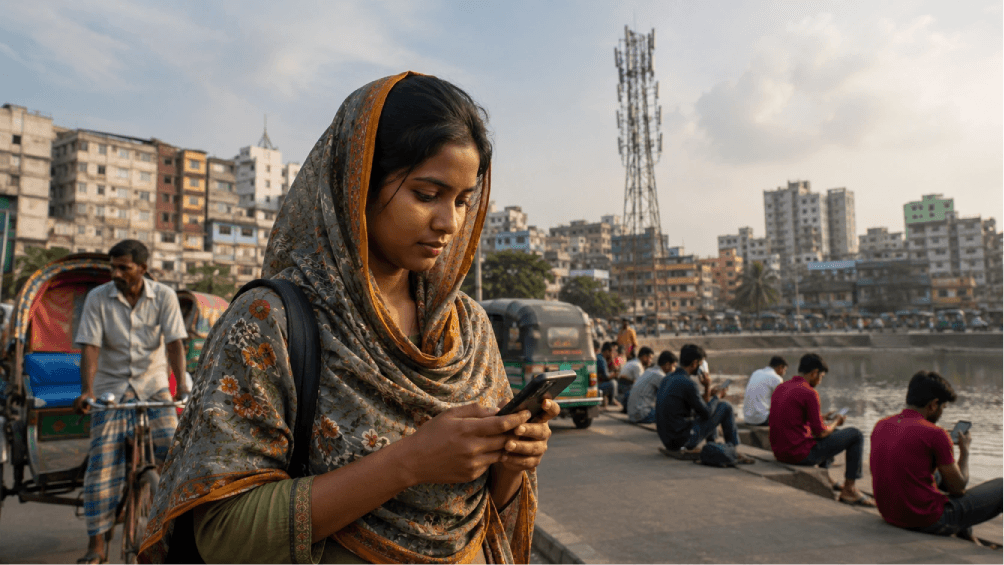
Mobile Communication Market Overview
According to data from the Bangladesh Telecommunication Regulatory Commission (BTRC), as of March 2026, the country has approximately 186.06 million mobile connections.
|
Mobile Operator |
Mobile Connections |
Estimated Share |
|
GrameenPhone |
84.84 million |
45.6% |
|
Robi Axiata |
57.39 million |
30.8% |
|
Banglalink |
37.37 million |
20.1% |
|
Teletalk |
6.82 million |
3.7% |
GrameenPhone and Robi Axiata account for about three-quarters of mobile connections. For international companies, the delivery performance of these two operators directly affects national coverage. Banglalink and Teletalk are smaller, but without either, it cannot be considered a complete Bangladesh route.
It should be noted that the number of mobile connections does not equal the number of unique users. A person may hold multiple SIM cards due to tariffs, work, or network coverage. DataReportal estimates that Bangladesh had about 82.8 million unique internet users in October 2025; BTRC statistics for February 2026 show 128.27 million internet subscriptions. The former estimates the number of people, while the latter counts subscription connections that have used the internet at least once in the past 90 days; they cannot be directly compared. DataReportal "Digital 2026: Bangladesh", BTRC Internet User Statistics
These data can illustrate mobile communication coverage in Bangladesh but cannot be directly used to estimate potential iGaming users or market revenue.
iGaming Business Boundaries: Legal Framework and Access Restrictions
Before discussing any technical solutions, companies first need to answer a prerequisite question: Is this business permitted to be offered to users in Bangladesh?
Bangladesh enacted and implemented the "Gambling Prevention Act, 2026" on July 1, 2026. The new law covers online gambling, remote gambling, sports betting, digital gambling platforms, digital wallets, cryptocurrency, and related digital infrastructure, while prohibiting acting as a representative, agent, or facilitator for overseas online gambling platforms.
Gambling advertising, sponsorship, affiliate marketing, and referral activities are also regulated behaviors. Online or remote gambling can face up to five years in prison or a fine of 10 million Taka; operating a gambling network through digital infrastructure can face up to seven years in prison and a fine of 50 million Taka. This clearly distinguishes Bangladesh from ordinary CPaaS growth markets. The fact that local networks can deliver SMS and Voice does not mean international iGaming companies can provide or promote related businesses to residents. Even if a platform has an overseas license and a registered Sender ID, it cannot replace local business access.
Companies should re-examine access, registration, OTP, payment, and customer service traffic from Bangladesh and obtain local legal advice for specific products, service targets, and communication content. CPaaS providers also need to determine whether the client entity, message type, and specific use fall within the acceptable scope.
How a Message Reaches the User: Bangladesh A2P SMS Local Delivery Chain
For confirmed account security, user support, or other approved scenarios, an SMS typically passes through an international or regional CPaaS platform, a local Bangladesh A2P service provider, and then enters the local mobile operator's network.
BTRC implements registration management for A2P SMS aggregators. In February 2026, the regulator canceled the registration certificates of 22 aggregators for reasons including failure to apply for renewal on time, voluntary abandonment of renewal, and non-compliant equity associations.
Therefore, "Bangladesh" in a provider's coverage list only proves they claim to support the destination, not the quality of the route or the long-term stability of local partnerships. Companies also need to confirm which type of local service provider is used for delivery, which operators are covered, and how changes in routes or qualifications are handled.
OTP and Registration Conversion: The First Hurdle of User Experience
After understanding how messages land in Bangladesh, the next thing to look at is: What is the user's first experience communicating with the platform? For the vast majority of players, this experience is OTP.
If the verification code arrives on time, users won't notice the local aggregators and operator routes behind it. Once a delay occurs, the problem is quickly magnified—the user clicks send again, and the old and new verification codes arrive out of order, and the number already entered might have just expired. The platform pays for multiple SMS messages but doesn't get a single successful registration.
The final delivery rate cannot fully explain this experience. Companies also need to know how long it took for the verification code to arrive, how many users completed verification after the first send, and the differences between operators.
Average latency can also lead to misjudgment. Most OTPs arrive within seconds, but a small number of messages take over a minute; the overall average will still appear normal. The waiting time for 50% of users and 95% of users better reflects what the majority and slow users respectively experienced.
The same events and concentrated promotions will make the problem more obvious. A surge of registration requests in a short time can cause queuing, and abnormal number segments and bot requests will also consume the SMS budget. CPaaS platforms need to identify duplicate requests, abnormal frequencies, and potential SMS traffic fraud, and feed the results back to the registration and risk control systems.
For operations teams, the most valuable thing to track is not the total volume of SMS, but the OTP arrival rate within the effective time, the first-time verification success rate, and the cost per successful verification.
Sender ID and Multi-language Templates: Letting Users Recognize You
Once the route is stable, users still need to believe that the message indeed comes from the platform.
According to the current Bangladesh SMS guidelines published by Twilio, Grameenphone, Robi Axiata, and Teletalk require pre-registration of alphanumeric Sender IDs. Since September 8, 2025, unregistered Sender ID messages sent to these networks via Twilio will be blocked. Twilio gives a reference processing time of about three weeks; materials and cycles for other providers and operators may vary. Twilio Bangladesh SMS Guidelines
Sender ID helps users identify verification codes and account notifications, but it only solves the identity issue and does not mean the business and content have been approved. Companies should reserve audit time in the project schedule and confirm the registration status of each operator separately.
Bangladesh users may use English, Bengali, or Banglish (Bengali spelled with Latin letters). Language choice not only affects understanding but also changes SMS segmentation and costs.
English SMS typically uses GSM encoding, which can hold more characters per segment. Bengali generally requires Unicode encoding, which has a smaller character capacity per segment. An English notification translated into Bengali might be split into two or even more segments.
For the few service scenarios that pass business audits, if SMS cannot explain complex identity verification or account issues, Voice and human customer service can be further evaluated. However, Voice also needs to undergo review for business purpose, user authorization, and provider policy, and cannot be used to bypass SMS content restrictions.
CPaaS Provider Acceptance: Verifiable Delivery Quality
Price is still important, but a single SMS quote can hardly reflect the actual cost. OTP delays lose registrations, Unicode segmentation increases costs, and opaque routing slows down troubleshooting. Companies need to verify at least the following five items:
|
Acceptance Item |
Evidence to be Confirmed |
|
Business Acceptance |
Whether the client entity, message purpose, and content are accepted |
|
Local Delivery |
A2P delivery method and partner type |
|
Operator Coverage |
Network-specific test results for the four operators |
|
Sender ID |
Registration materials, audit status, and estimated cycle |
|
Message Quality |
Final delivery rate, P50/P95 arrival time, and failure reasons |
In the provider evaluation phase, Laaffic can participate in communication solution design around channels such as SMS, Voice, AI Voice Calling, and Cloud Contact Centers. However, in Bangladesh, communication coverage cannot replace business access. Whether a specific use is accepted, whether a Sender ID can be registered, and how local routes are delivered still need to be confirmed item by item based on the company entity, message content, and operator audit.
Before formal integration, companies also need to conduct per-operator testing with real Bangladesh numbers. Testing should include OTP peaks, Unicode templates, duplicate requests, and route failures. Only verifying the success path will not reveal the provider's ability to handle exceptions.
Bangladesh CPaaS Market Judgment
Bangladesh already has A2P SMS service providers, four major mobile operators, and communication capabilities such as Voice and Cloud Contact Centers. From an infrastructure perspective, it is not a blank market waiting to be developed.
The difficulty lies outside of communication. The new law announced in 2026 tightened the iGaming business boundaries; international operators cannot derive market opportunities based on 186 million mobile connections. Local traffic, registration requests, and communication needs need to be identified, but whether service can continue depends on specific business and legal opinions.
The value of Laaffic in this market should not be summarized as just adding a coverable country. More practical work is helping iGaming companies identify local delivery chains, observe OTP timeliness, manage Sender IDs, and let SMS, Voice, AI Agent Call, and human customer service share user status. In the Bangladesh market, Laaffic can help Gaming customers increase the 5-second arrival rate of OTP from the industry average of 60-70% to over 85%.
Bangladesh can test whether a CPaaS provider truly understands the local market. A country name on a coverage list is far from enough. What companies ultimately need is verifiable delivery quality and the control capability to timely stop communication when the business is not permitted.
FAQ:
Is online Gaming business allowed in Bangladesh?
The Bangladesh "Gambling Prevention Act, 2026" strictly regulates online gambling, remote gambling, sports betting, and related promotion and assistance behaviors. Overseas licenses cannot replace local business access; companies need to obtain local legal advice based on specific products, service targets, and communication content.
Is Sender ID registration required to send A2P SMS in Bangladesh?
According to the current Bangladesh SMS guidelines published by Twilio and 8x8, Grameenphone, Robi Axiata, and Teletalk require registration of alphanumeric Sender IDs. Specific materials, processing cycles, and content restrictions depend on the communication provider and operator audit.
How should Gaming companies in Bangladesh choose a CPaaS provider?
Companies should first confirm whether the provider accepts the relevant business and message content, then check the local Bangladesh A2P delivery method, coverage of Grameenphone, Robi Axiata, Banglalink, and Teletalk, Sender ID registration support, and the final delivery rate and arrival time of OTP.
Laaffic has over 18 years of experience in communication marketing, with communication resources covering more than 200 countries and regions worldwide, providing products such as SMS, Voice, AI Voice Group Calling, Hang-up SMS, and Cloud Call Centers. Meanwhile, Laaffic has passed ISO 9001, ISO 27701, ISO 20000, and ISO 27001 certifications. Companies can include Laaffic in their Bangladesh communication solution evaluation, but specific business acceptance, local routing, and operator delivery quality still need to be confirmed through project audits and real number testing.